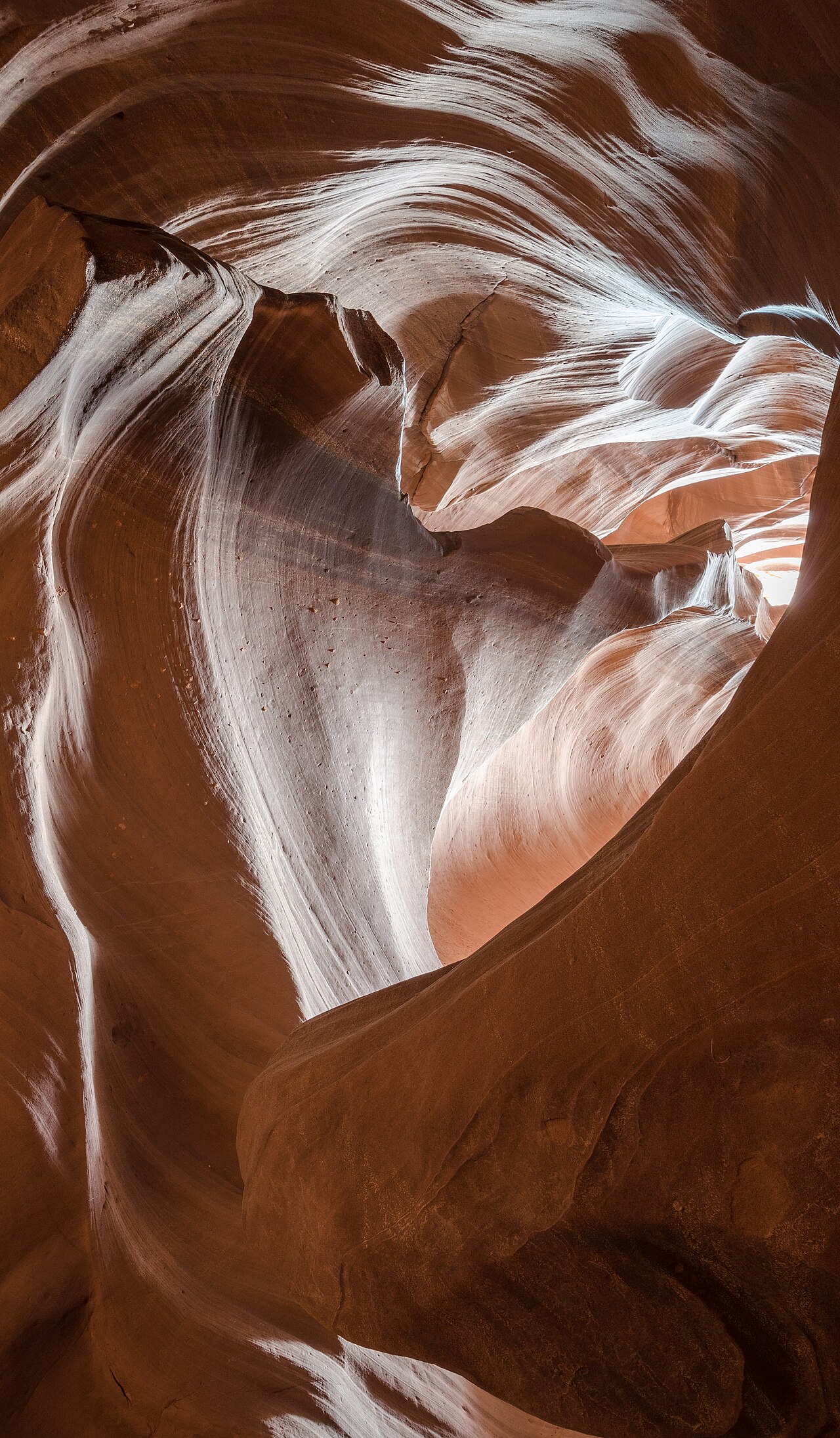
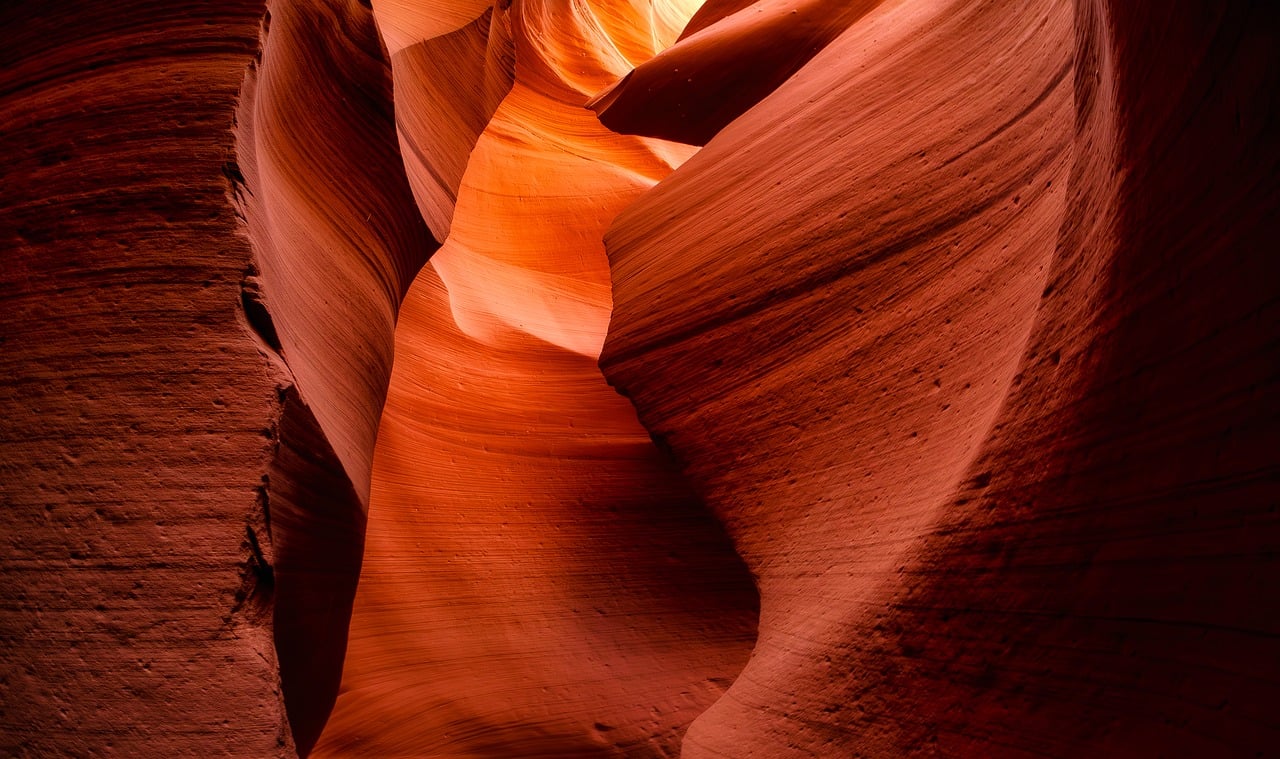
The slot canyons are the most forgiving great subject in landscape photography — the stone does the composition — and the least forgiving environment for gear habits built elsewhere. The working guide:
Know the light you're booking. Upper's beams are a scheduled event: late March to early October, late morning to early afternoon, strongest near the solstice — those slots cost more and sell out first, and outside them Upper is a dark canyon that tests phone sensors. Lower, X, Secret, and Waterholes run on reflected light instead: open rims bounce sun down the walls all day, saturating the oranges and purples your feed knows — which means the "lesser" canyons are often the better shoot, and midday, elsewhere the enemy, is prime slot time everywhere.
The no-tripod reality. Tripods, monopods, and bags are banned in the famous corridors — the dedicated photo tours died with the crowds — so the craft is handheld: brace against stone, exhale, shoot bursts. Phones: lock exposure on the bright wall (not the shadows), drag exposure down until the highlights hold, and shoot the beams in burst as guides toss sand — the shafts go solid for two seconds and HDR smears them. Cameras: fast wide glass, ISO courage (walls hide noise beautifully), underexpose a stop and lift shadows later — the stone's dynamic range rewards raw files. Look up constantly; the ceilings out-compose the corridors.
Match canyon to shot. The beam shaft: Upper, booked for the window, no alternative. Wave abstracts and glow: Lower and X, all day. Texture and intimacy: Secret's narrows. Environmental frames with a human for scale: X and Waterholes, where empty corridors allow staging the twins stopped permitting years ago. Guides at every canyon know the named formations and your phone's best angles — let them run the choreography; it's practiced, not hokey.
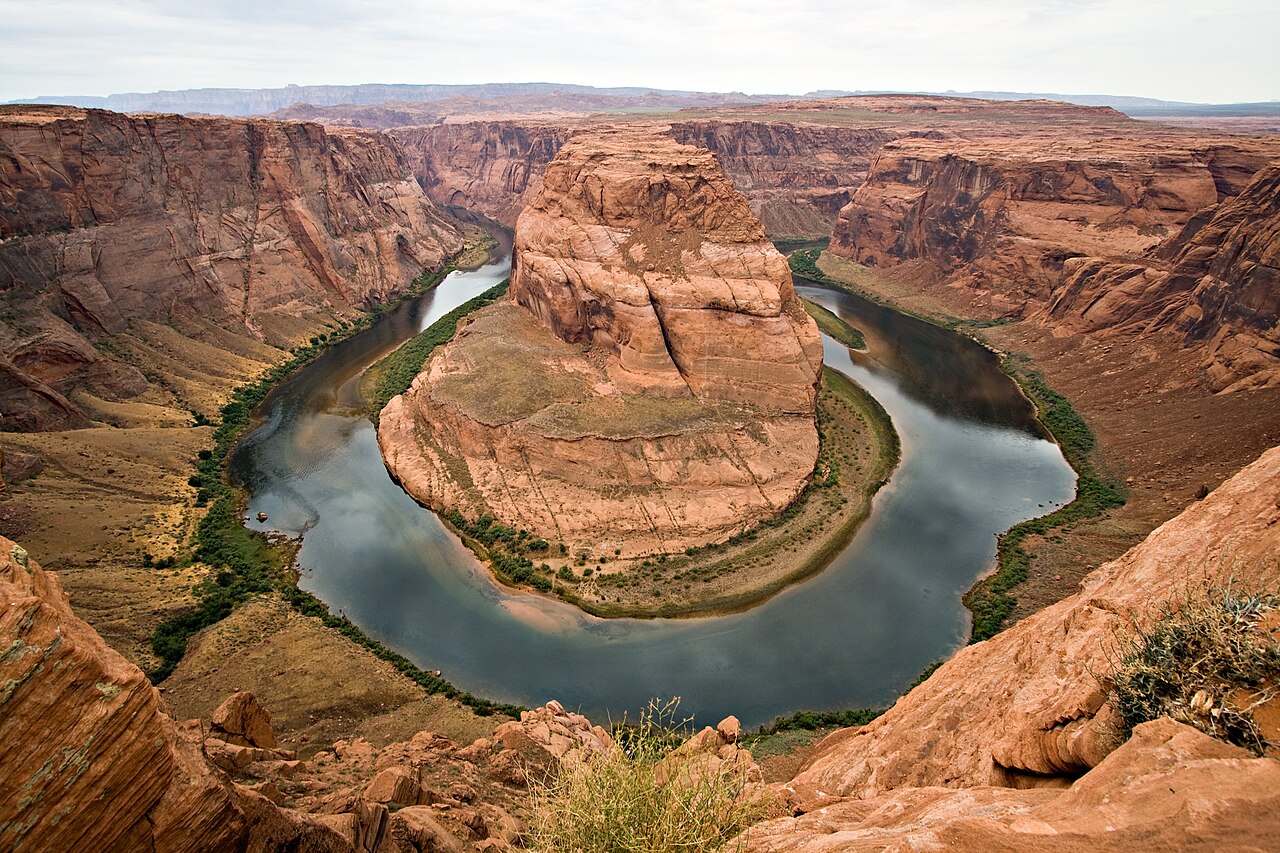
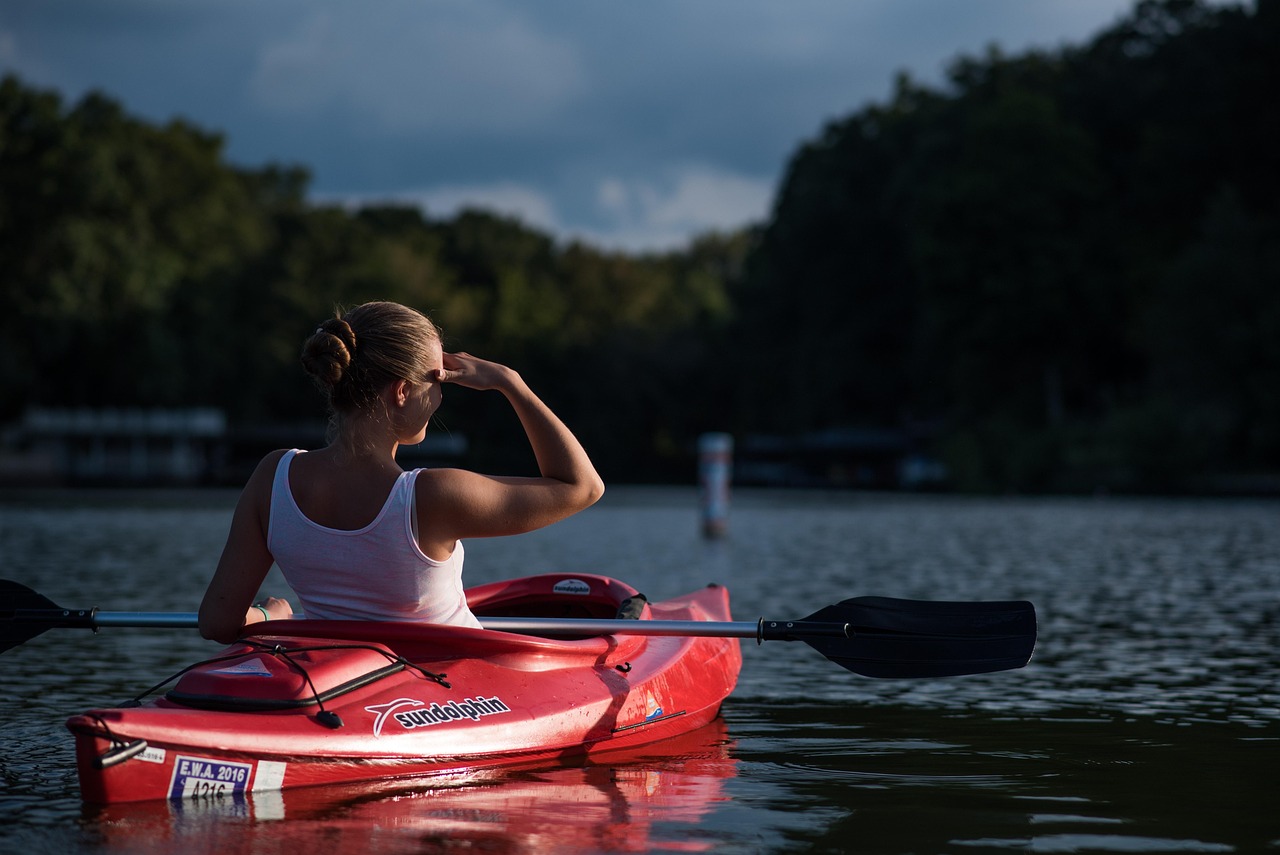
The rest of the portfolio. Horseshoe Bend: sunrise for color and calm, mid-morning for the green river, wide lens mandatory, rim caution literal — and the air tour buys the full-circle frame the rim can't see. The lake: golden-hour boat or kayak slots turn the buttes to embers over blue; the kayak's water-level narrows shots are the feed's freshest Page angle. Toadstools and Monument Valley: golden hour, both ends, no permits, endless patience with the light.
The etiquette that keeps access open. The corridors move on schedule — compose fast, step aside, never block for the eleventh frame; drones are banned across Navajo parks and the Horseshoe rim; ask before photographing guides or residents; and remember whose land the stone is — the canyons stayed beautiful because the Diné manage them, and the photographer who treats guides as collaborators gets the sand toss aimed at their beam.